How long does exterior paint take to dry? The answer depends on the coating, the surface, and the conditions during application. Paint can feel dry to the touch before it is ready for another coat, rain exposure, cleaning, or normal contact.
For Federal Way homeowners, that difference matters because moisture, shade, surface temperature, wind, and changing Pacific Northwest weather can affect an exterior project throughout the day. The safest timing comes from the product specifications and the actual conditions at the property.
Dry to the Touch, Recoat Time, and Cure Are Different
Exterior paint does not move from wet to finished in one step. Each stage tells you something different about what the coating can handle.
Dry to the touch means the surface no longer feels wet under the listed conditions. Recoat time is the point when another coat can be applied. Rain resistance describes when a specific coating can handle moisture after application. Cure is the longer hardening period after the coating has dried.
Because those stages happen on different schedules, touching the siding is not a dependable way to decide when the next step should happen.
Why There Is No Single Exterior Paint Drying Time
Exterior coatings do not all use the same formula, application limits, recoat window, or rain-resistance period. Two exterior acrylic paints can still list different timing requirements.
The better reference is the technical data sheet for the coating being used. It lists the approved application conditions, expected dry and recoat information, and other details that affect performance.
This matters even more when a project includes different products on siding, trim, doors, gutters, masonry, metal, or specialty surfaces.
What Changes Exterior Paint Drying in Federal Way
Drying conditions can change from one wall to another and from morning to afternoon. At Paint Pro’s NW, we look at several factors before starting or recoating.
Our guide to exterior latex paint versus oil-based paint explains why different coating types should not be treated as if they share one drying schedule.
How Rain Changes the Painting Schedule
Rain resistance is product-specific. Some exterior coatings are made to resist rain sooner than others, while different systems need more time before moisture exposure.
That does not mean a rain-resistant coating can be applied to a wet surface. The substrate still needs to meet the product requirements before painting begins.
Before exterior work, we compare the coating specifications with the National Weather Service forecast for Federal Way so rain, wind, moisture, and temperature can be considered together.
What Can Happen When a Coat Goes on Too Soon
Applying another coat before the first reaches its required recoat stage can affect the finish. The exact problem depends on the coating, surface, film thickness, and conditions.
The listed recoat window is more dependable than guessing from how dry the surface feels.
How We Decide When the Next Coat Can Go On
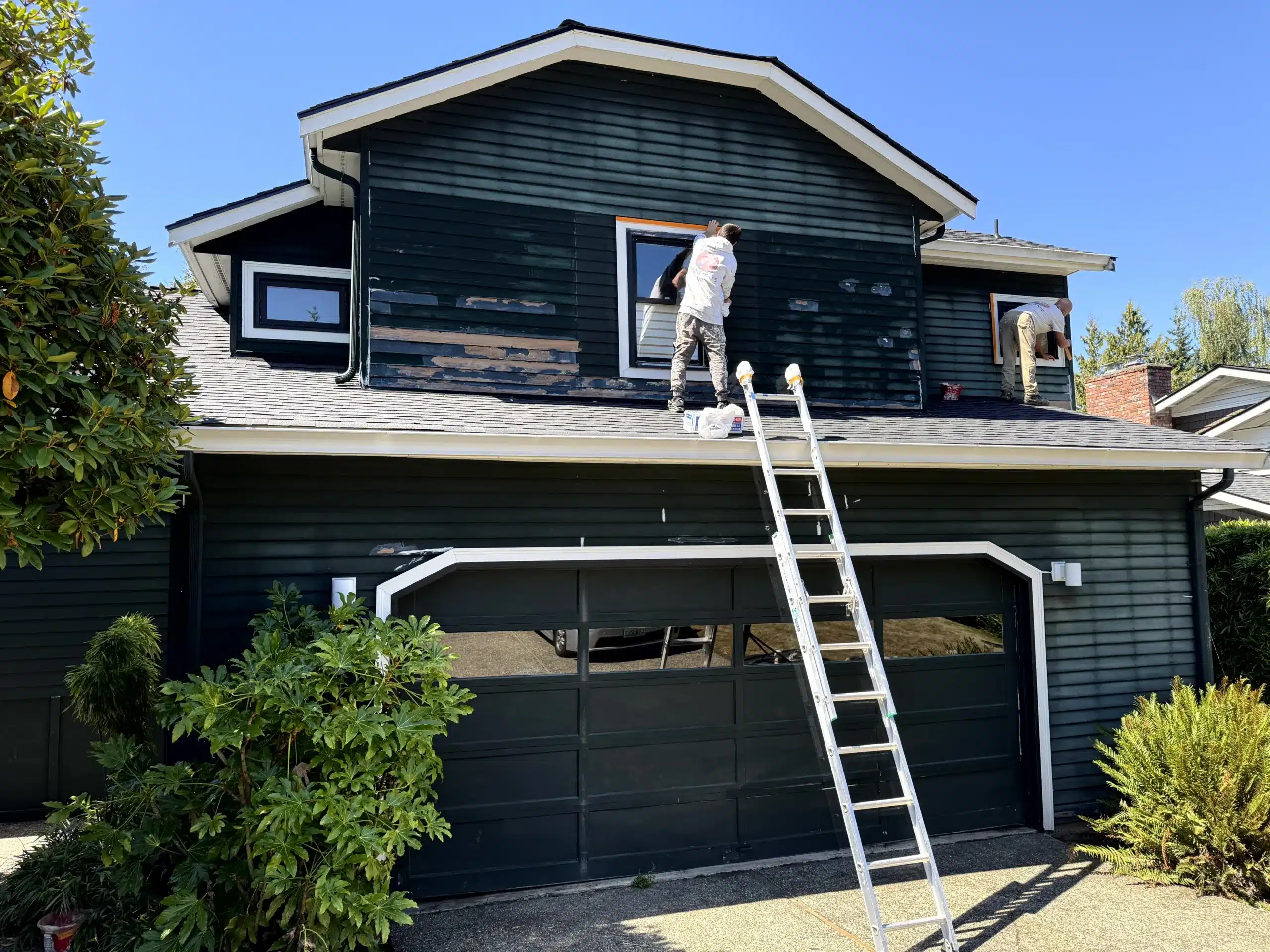
Before recoating, we compare the manufacturer requirements with the actual conditions at the property. We also look at the surface for moisture, contamination, or areas that need more preparation.
Our article on questions to ask a painting contractor covers other process details worth discussing before work begins.
Does Exterior Paint Need to Fully Cure Before Normal Weather?
No. Full cure and rain resistance are different stages. Exterior coatings are made to continue hardening after the first dry stages.
The practical question is what the coating needs to handle next. That might be another coat, expected rain, closing a painted door or window, light contact, or cleaning.
Use the product data sheet for those decisions instead of applying one cure-time number to every exterior product.
Exterior Painting Timing at Paint Pro’s NW
At Paint Pro’s NW, we serve Federal Way, Seattle, Sammamish, Gig Harbor, Bellevue, and other communities across King and Pierce Counties with residential and commercial painting.
We are locally owned and operated, licensed and insured, and provide free on-site estimates with daily project communication.
Our current website lists a five-year craftsmanship guarantee. Product selection, preparation, coat timing, and weather decisions are handled as part of the exterior project process.
Our exterior house painting service explains the preparation, products, and exterior work we provide in more detail.
Frequently Asked Questions About Exterior Paint Drying
How long does exterior paint take to dry?
There is no universal time for every exterior coating. Check the product data sheet for its dry-to-touch, recoat, rain-resistance, and cure information under the listed conditions.
Can exterior paint get rained on the same day?
Some exterior coatings are made for faster rain resistance than others. The timing depends on the product, and the surface still needs to be dry enough before application.
How do I know when exterior paint is ready for a second coat?
Use the manufacturer’s listed recoat time and confirm that current conditions meet the product requirements. Touch alone is not a dependable test.
Does Federal Way moisture slow exterior paint drying?
Higher moisture in the air and damp surfaces can affect evaporation and drying behavior. The effect depends on the coating and the listed application conditions.
Does exterior paint need to fully cure before rain?
No. Rain resistance and full cure are different stages. Follow the coating’s specific rain-resistance guidance.